Structure & alterations
Connect the present layout, recorded changes and the exact structural question. A visible crack or an open-plan room does not establish the load path.
What supports the answer?
Available means you have a record to review. It does not establish condition, completeness or that the question is resolved.
Layout and supports
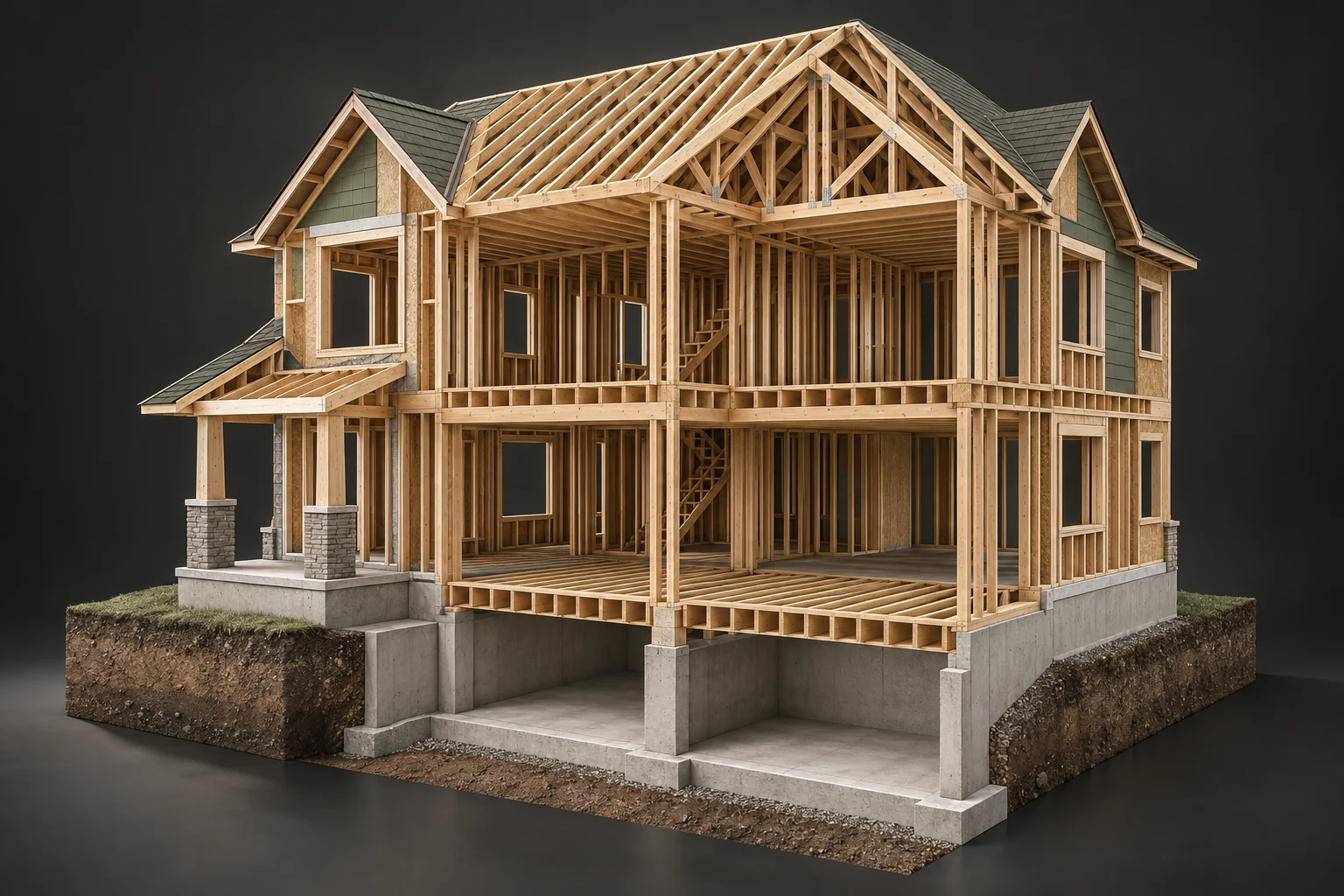
What evidence identifies the framing and supports relevant to this room or proposed change, and which portions remain concealed?
Useful record: Available drawings, a dated scoped report and photographs identifying their actual locations. A conceptual atlas image is not a drawing of this home.
Changes and their scope
Which walls, openings or substantial loads changed, and what records describe the proposed work and the work reportedly completed?
Useful record: Dated renovation plans, permit records, inspection results, invoices and documented revisions; retain gaps between proposal and completion.
The question assessed
Was the engagement an accessible condition review or an engineering assessment of a defined alteration, and what access, assumptions and exclusions did it use?
Useful record: The complete agreement and report, including the property reference, author, date, examined areas and limitations.
Keep the observation useful.
Describe what you noticed and when. An unknown is a question, not a defect.
- From ordinary accessible rooms, note the location and date of visible cracks, uneven surfaces or a reported change. Describe the observation without assigning a structural cause.
- Use existing photographs and records to compare the same area over time. Record when a change was first noticed and any nearby work described to you.
- Keep finishes, supports and framing intact. Do not enter roof spaces or concealed areas, add loads or remove a wall to resolve a planning question.
Move the question forward.
These are planning actions. A checked task records your action, not a verified system condition.
Owning: three useful actions
Buying: three useful actions
Selling: three useful actions
A new home: three useful actions
Ask for a defined deliverable.
Agree with the appropriate inspector or structural professional whether you need a condition review or assessment of a specific proposed change, including access, methods and exclusions.
What the scoped work can show
- The members and supports actually examined, dated observations and the access limitations affecting those findings.
- For an explicitly commissioned engineering assessment, the defined proposal, design assumptions and supporting analysis within that scope.
- Which existing records support the assessment, which details need clarification and what further investigation is recommended for a stated reason.
What it cannot establish on its own
- The condition of inaccessible connections, concealed members or soil without the evidence and methods needed to assess them.
- A crack’s cause or the capacity of the whole structure from a photograph or appearance alone.
- Suitability for every future load, alteration or use, or blanket compliance beyond the report’s actual scope.
Read the guide.
Go to the source.
- City of Calgary · Home renovations and basements
- City of Calgary · Property research and permit records
- Government of Alberta · Hiring a home inspector
- City of Calgary · New house construction and inspection stages
Public references inform the explanation. They have not reviewed this plan or endorsed HomeAI.